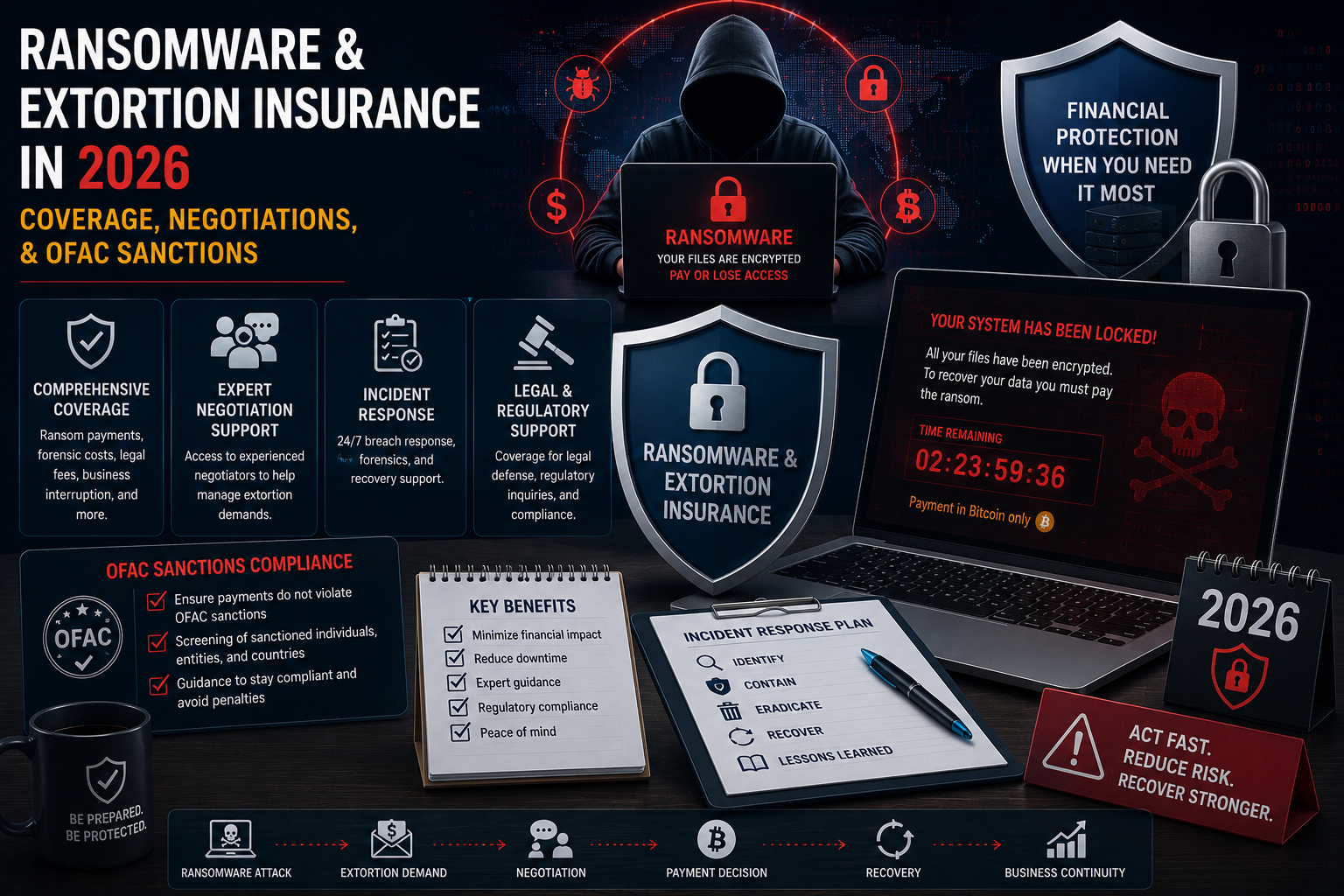
Ransomware has evolved from opportunistic, automated malware into a highly sophisticated, multi-billion-dollar extortion industry. Modern threat actor syndicates employ double and triple extortion tactics—not only encrypting mission-critical operational systems, but also exfiltrating sensitive corporate data, threatening public release, and contacting customers, regulators, or media outlets directly to force maximum leverage.
For executive leadership and risk managers, navigating a ransomware event is a complex operational, legal, and financial challenge. Organizations must balance operational recovery against stringent statutory frameworks, including Office of Foreign Assets Control (OFAC) sanctions regulations, local data privacy mandates, and evolving cyber insurance policy conditions.
Securing comprehensive Ransomware & Cyber Extortion Insurance requires understanding complex policy sub-limits, strict co-insurance requirements, pre-approved incident response vendor frameworks, and sanction compliance protocols. This technical guide provides an exhaustive analysis of ransomware policy dynamics, extortion negotiation workflows, OFAC liability, technical underwriting baselines, real-world claim scenarios, and crisis response frameworks.
Evolution of Extortion Tactics: From File Encryption to Multi-Layer Blackmail
To structure appropriate risk transfer mechanisms, corporate leadership must evaluate the modern multi-tier ransomware threat model.
       ┌──────────────────────────────────────────────────────────┐
       │             MULTI-TIER EXTORTION MECHANICS               │
       └────────────────────────────┬─────────────────────────────┘
                                    │
       ┌────────────────────────────┼─────────────────────────────┐
       │                            │                             │
       ▼                            ▼                             ▼
┌──────────────┐           ┌─────────────────┐          ┌───────────────────┐
│ Tier 1:      │           │ Tier 2:         │           │ Tier 3:           │
│ Encryption   │           │ Exfiltration    │           │ Harassment        │
└──────┬───────┘           └────────┬────────┘          └─────────┬─────────┘
       │                            │                             │
       ▼                            ▼                             ▼
Systems encrypted using     Extfiltration of PII/IP;    Direct extortion of
high-grade symmetric        threats to publish on       customers, partners,
cryptography.               dark web leak sites.        and regulators.
Tier 1: System and Backup Encryption
Threat actors gain access via unpatched vulnerabilities, stolen credentials, or phishing campaigns. Once inside, they move laterally, compromise Active Directory, locate and delete online backups, and deploy high-grade encryption across enterprise endpoints and server infrastructure.
Tier 2: Data Exfiltration (Double Extortion)
Prior to launching encryption binaries, attackers exfiltrate gigabytes of confidential business records, employee personal identifiable information (PII), intellectual property, and internal financial logs. Even if an organization restores operations from secure out-of-band backups, attackers demand payment to prevent public disclosure of stolen data.
Tier 3: Stakeholder Harassment & Denial of Service (Triple Extortion)
Attackers apply extreme pressure by launching Distributed Denial of Service (DDoS) attacks against corporate web infrastructure while systematically contacting affected customers, business partners, and media outlets directly to report the breach.
Anatomy of Ransomware & Cyber Extortion Coverage
A dedicated ransomware endorsement attached to a Standalone Cyber Insurance policy provides financial reimbursement across several operational buckets.
                 ┌───────────────────────────────────────┐
                 │    RANSOMWARE COVERAGE ARCHITECTURE   │
                 └───────────────────┬───────────────────┘
                                     │
     ┌───────────────────┬───────────┴───────────┬───────────────────┐
     │                   │                       │                   │
     ▼                   ▼                       ▼                   ▼
┌─────────┐         ┌─────────┐             ┌─────────┐         ┌─────────┐
│ Extortion│        │ Crisis  │             │ System  │         │ Business│
│ Payment │         │ Negoti- │             │ Restor- │         │ Interrup│
│ Reimbur.│         │ ation   │             │ ation   │         │ tion    │
└────┬────┘         └────┬────┘             └────┬────┘         └────┬────┘
     │                   │                       │                   │
     ▼                   ▼                       ▼                   ▼
Reimbursement of    Fees for professional   Costs to wipe,      Reimbursement for
authorized ransom   extortion negotiators   rebuild, & restore  lost revenue during
payments.           & breach counsel.       corrupted systems.  operational downtime.
Key Policy Provisions Explained
1. Ransom Payment / Extortion Monies Endorsement
Reimburses the insured business for actual extortion payments (typically settled in cryptocurrency) made to threat actors to secure decryption keys or binding non-disclosure agreements, subject to legal compliance and prior carrier approval.
2. Specialist Extortion Negotiation & Legal Counsel Fees
Covers the high hourly fees of specialized ransomware negotiators, certified digital forensics and incident response (DFIR) teams, and specialized breach counsel to manage communications, verify decryption keys, and coordinate recovery efforts.
3. System Reconstruction & Data Restoration
Reimburses costs incurred to clean infected hardware, reinstall operating systems, rebuild damaged databases, and manually re-enter lost data from verified physical records or uncorrupted backup archives.
Detailed Ransomware Policy Conditions Comparison Matrix
| Coverage Element | Standard Cyber Policy | Co-Insurance Ransom Endorsement | Comprehensive Cyber Extortion Policy | Crucial Sub-Limits & Restrictions |
| Ransom Payment Reimbursement | Sub-Limited | Co-Insured (e.g., 50/50) | Primary Coverage | Subject to OFAC sanction checks before payment authorization. |
| Negotiator & DFIR Vendor Fees | Primary Coverage | Primary Coverage | Primary Coverage | Must utilize pre-approved carrier panel vendors. |
| Business Interruption Downtime | Primary Coverage | Primary Coverage | Primary Coverage | Subject to an 8- to 24-hour waiting period / time deductible. |
| Cryptocurrency Transaction Fees | Excluded | Excluded | Included | Covers high-volatility slippage and broker transfer fees. |
| Data Breach Notification Costs | Primary Coverage | Primary Coverage | Primary Coverage | Full policy aggregate limits typically available. |
Legal & Regulatory Constraints: OFAC Sanctions Compliance in 2026
The single largest legal hurdle in ransomware claim processing is compliance with regulatory sanctions enforced by government agencies, such as the U.S. Treasury Department’s Office of Foreign Assets Control (OFAC).
                        ┌────────────────────────────────┐
                        │    OFAC SANCTIONS COMPLIANCE   │
                        └───────────────┬────────────────┘
                                        │
    ┌────────────────────┬──────────────┴──────────────┬────────────────────┐
    │                    │                             │                    │
    ▼                    ▼                             ▼                    ▼
┌──────────────┐  ┌──────────────┐             ┌──────────────┐     ┌──────────────┐
│ Crypto Wallet│  │ Threat Actor │             │ Strict Legal │     │ Complete     │
│ Address Screening │ Group Attribution │      │ Liability    │     │ Policy Exclusion│
└──────────────┘  └──────────────┘             └──────────────┘     └──────────────┘
Screen receiving  Verify against known         Ransom payment to    Insurers will deny
crypto wallet     sanction lists (e.g.,        sanctioned entity    claims if payment
against OFAC list. LockBit, Lazarus).          violates law.        violates sanctions.
1. Strict Liability for Sanctions Violations
OFAC enforcement guidelines hold organizations strictly liable for making or facilitating extortion payments to sanctioned entities, designated foreign terrorist organizations, or cybercrime groups operating under state sponsorship. Ignorance of the threat actor’s true identity is not a valid legal defense.
2. The Mandatory Sanctions Screening Protocol
Before an insurer, breach counsel, or negotiator authorizes a ransom payment, the receiving cryptocurrency wallet address, threat actor handle, and negotiation artifacts must be screened against active sanction databases. If a threat group is attributed to a sanctioned entity, insurance carriers are legally prohibited from reimbursing or facilitating the payment.
Technical Underwriting Baseline Requirements for Ransomware Coverage
To obtain ransomware coverage without severe co-insurance penalties or sub-limits, organizations must demonstrate robust security hygiene:
┌─────────────────────────────────────────────────────────┐
│            RANSOMWARE UNDERWRITING BASELINES            │
└────────────────────────────┬────────────────────────────┘
                             │
                             ▼
┌─────────────────────────────────────────────────────────┐
│ 1. BACKUP INFRASTRUCTURE HARDENING                       │
│    - Immutable, air-gapped, or WORM backup storage.    │
│    - Regular, automated backup restoration testing.     │
│    - Backups decoupled from primary Active Directory.    │
└────────────────────────────┬────────────────────────────┘
                             │
                             ▼
┌─────────────────────────────────────────────────────────┐
│ 2. ADVANCED ENDPOINT DETECTION & RESPONSE                │
│    - 24/7 Managed EDR deployed across 100% of hosts.    │
│    - Centralized SOC with automated isolation rules.    │
└────────────────────────────┬────────────────────────────┘
                             │
                             ▼
┌─────────────────────────────────────────────────────────┐
│ 3. IDENTITY & ACCESS MANAGEMENT HARDENING                │
│    - Mandatory MFA across all remote access & email.   │
│    - Privileged Access Management (PAM) controls.       │
└────────────────────────────┘
- Immutable and Air-Gapped Backup Systems: Backups must be isolated from the main network domain using write-once-read-many (WORM) configurations, offline physical tapes, or immutable cloud storage to ensure threat actors cannot delete backup archives during an attack.
- Universal Multi-Factor Authentication (MFA): MFA must be enforced across all remote network access points, remote desktop protocols (RDP), cloud consoles, webmail portals, and administrative access tools. Unprotected RDP instances directly connected to the internet must be disabled.
- Endpoint Detection and Response (EDR) with 24/7 Monitoring: Deploying modern EDR agents across 100% of servers and workstation endpoints, continuously monitored by a 24/7 Security Operations Center (SOC) capable of isolating infected hosts automatically.
- Rigorous Patch Management Policies: Critical infrastructure vulnerabilities (especially edge network appliances, VPN gateways, and firewalls) must be patched within strict timeframes (e.g., 7 to 14 days from public zero-day disclosure).
Real-World Claims Analysis: Cyber Extortion Scenarios
Case Study 1: Manufacturing Firm Recovered Operations via Valid Backups
- The Target: A global automotive components manufacturer.
- The Incident: Threat actors compromised a remote access portal, deployed ransomware across 300 servers, and demanded a $4,000,000 extortion payment in Bitcoin to release decryption tools.
- Financial Exposure: $6,200,000 (including lost production time, incident response fees, and server rebuilding costs).
- The Outcome: The manufacturer held a $10,000,000 Cyber Insurance policy with dedicated ransomware coverage. Specialist negotiators established that the threat actor group was not sanctioned by OFAC. However, because the firm maintained clean, air-gapped immutable backups, leadership declined to pay the ransom. The insurance policy covered $2,100,000 in business interruption losses and $850,000 in system reconstruction fees, minus a $100,000 deductible.
Case Study 2: Ransomware Claim Denied Due to Sanction Match
- The Target: A regional healthcare management company.
- The Incident: Threat actors encrypted core electronic health record (EHR) databases, demanding $1,500,000. Due to severe operational disruption impacting patient care, leadership sought to pay the ransom immediately.
- Financial Exposure: $3,500,000 in overall operational losses.
- The Outcome: During mandatory pre-payment sanctions screening, forensics attributed the ransomware variant to a state-sponsored threat group explicitly listed on OFAC’s Specially Designated Nationals (SDN) list. The insurance carrier refused to approve or reimburse the ransom payment due to legal sanctions restrictions. The company was forced to rebuild systems manually from legacy physical tapes, absorbing massive operational downtime.
Step-by-Step Emergency Incident Response Framework for Ransomware Events
When an organization discovers active ransomware encryption or extortion threats, following an organized response protocol ensures operational recovery and preserves insurance claim validity:
┌─────────────────────────────────────────────────────────┐
│            RANSOMWARE EMERGENCY RESPONSE PLAN           │
└────────────────────────────┬────────────────────────────┘
                             │
                             ▼
┌─────────────────────────────────────────────────────────┐
│ STEP 1: Isolate Affected Subnets & Network Segments     │
└────────────────────────────┬────────────────────────────┘
                             │
                             ▼
┌─────────────────────────────────────────────────────────┐
│ STEP 2: Notify Carrier Hotline & Retain Breach Counsel   │
└────────────────────────────┬────────────────────────────┘
                             │
                             ▼
┌─────────────────────────────────────────────────────────┐
│ STEP 3: Deploy Crisis DFIR & Sanctions Screening Team   │
└────────────────────────────┬────────────────────────────┘
                             │
                             ▼
┌─────────────────────────────────────────────────────────┐
│ STEP 4: Evaluate Backup Integrity & Recovery Vectors   │
└────────────────────────────┬────────────────────────────┘
                             │
                             ▼
┌─────────────────────────────────────────────────────────┐
│ STEP 5: Conduct Managed Negotiations / Decryption Audit │
└────────────────────────────┘
Step 1: Immediately Contain and Isolate Network Infrastructure
Disconnect infected subnets, disable wireless access points, unbind network interface controllers (NICs), and sever VPN links to prevent ransomware binaries from spreading to secondary sites or cloud environments. Do not power off servers abruptly if volatile RAM memory forensics are needed.
Step 2: Contact Cyber Insurance Hotline & Retain Breach Counsel
Notify your insurance carrier immediately to activate emergency claim procedures. Retain approved breach counsel to ensure all incident response activities, investigation logs, and extortion communications remain protected under attorney-client privilege.
Step 3: Deploy DFIR and Conduct OFAC Sanctions Screening
Engage pre-approved DFIR specialists to preserve evidence, collect ransom notes, determine the root cause of access, and perform mandatory OFAC sanctions screening against threat actor wallet addresses and indicators of compromise (IOCs).
Step 4: Validate Backup Integrity and Assess Business Continuity
Audit offline and cloud backup archives to confirm they remain uncorrupted and free of dormant malware triggers. Compare the time required to restore operations from backups against extortion recovery alternatives.
Step 5: Execute Managed Extortion Strategy Under Legal Guidance
If extortion negotiations are legally permissible and necessary, allow certified professional negotiators to manage communications with threat actors, request proof of decryption functionality, negotiate payment terms, and secure signed verification of data deletion.
Frequently Asked Questions (FAQs)
Does cyber insurance automatically pay ransomware demands?
No. Insurance carriers require legal and regulatory validation before approving any ransom payment. Payments are subject to OFAC sanctions checks, verification that backups are unusable, confirmation that extortion sub-limits apply, and explicit authorization from breach counsel and the insurer.
What is double extortion ransomware?
Double extortion occurs when threat actors exfiltrate sensitive data before encrypting systems. They demand one payment for the decryption key to restore operations and a second payment to prevent the public disclosure or sale of exfiltrated data on dark web forums.
Can an organization be fined for paying a ransomware demand?
Yes. Paying a ransom to an individual or entity listed on government sanctions lists (such as OFAC’s SDN list) violates federal regulations and can result in severe civil penalties and criminal liability, regardless of whether the organization knew the recipient was sanctioned.
What is a ransomware co-insurance clause?
A co-insurance clause requires the policyholder to absorb a percentage of the total extortion payment out of pocket (e.g., a 50/50 split between the insurer and policyholder), encouraging companies to invest in resilient offline backups rather than relying solely on insurance payouts.
Why are immutable backups essential for cyber insurance eligibility?
Immutable backups cannot be altered, overwritten, or deleted by threat actors even if they obtain domain administrator credentials. Insurers view immutable backups as a critical control that enables organizations to recover independently without paying extortion demands.