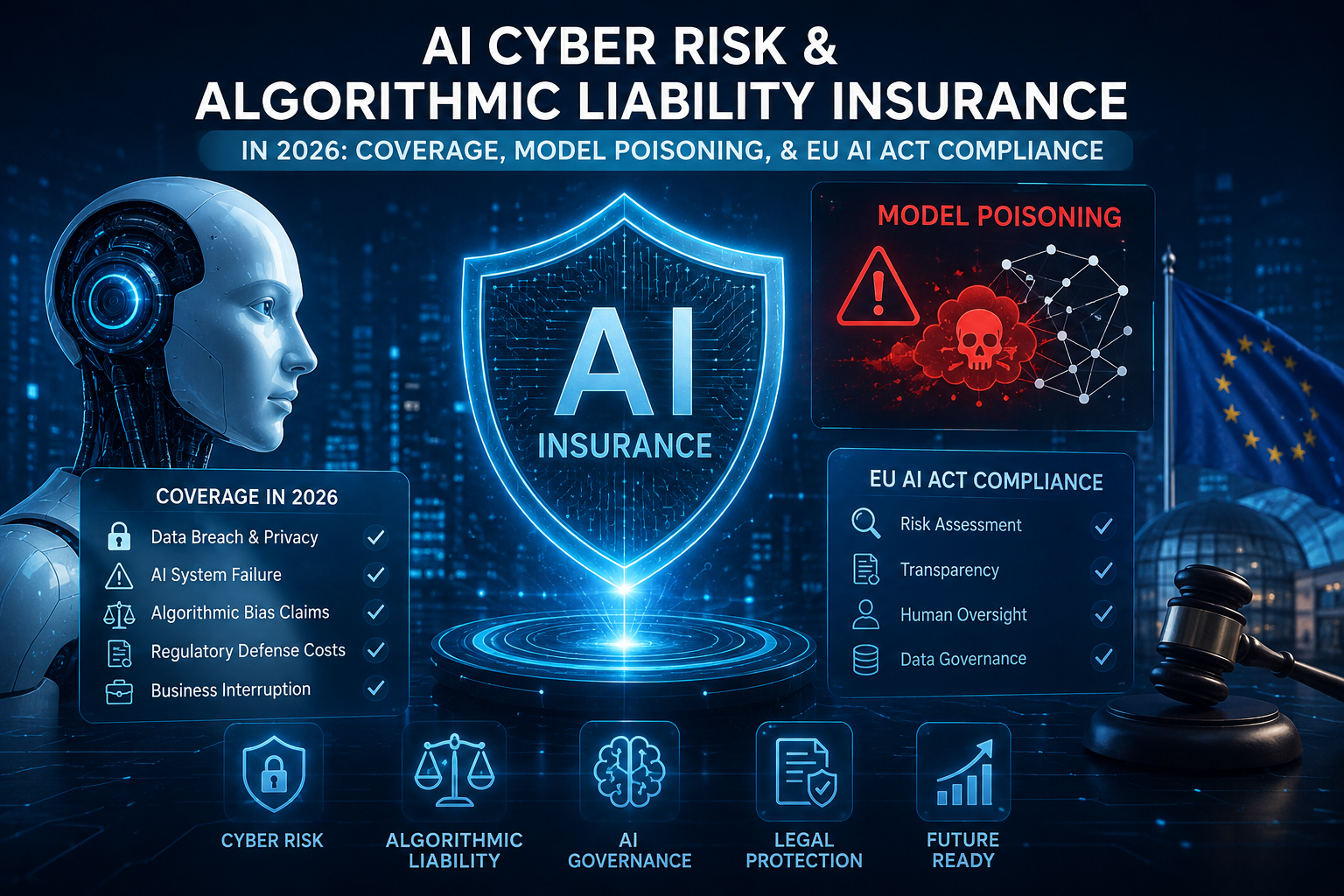
The integration of Generative AI (GenAI), Large Language Models (LLMs), and autonomous algorithmic Decision Support Systems across modern enterprises has fundamentally reshaped corporate risk profiles. While AI systems drive unprecedented operational efficiencies, they introduce novel threat vectors—including model poisoning, prompt injection exploits, training data exfiltration, algorithmic bias, and automated intellectual property (IP) infringement.
Traditional cyber liability and Technology Errors and Omissions (E&O) insurance policies were designed for deterministic, static software architectures. They contain significant coverage gaps when applied to probabilistic AI systems that learn, evolve, and generate unexpected outputs autonomously. Furthermore, regulatory frameworks such as the European Union Artificial Intelligence Act (EU AI Act) impose strict legal obligations and severe non-compliance fines on organizations deploying high-risk AI models.
To hedge against these emerging liabilities, enterprise risk managers require specialized AI Cyber Risk & Algorithmic Liability Insurance. This technical guide provides an exhaustive analysis of AI-specific threat vectors, emerging insurance endorsements, EU AI Act compliance mandates, technical underwriting baselines, real-world case studies, and incident response frameworks.
The AI Threat Landscape: Novel Exploitation Vectors
To structure comprehensive risk transfer mechanisms, executive leadership and Chief Information Security Officers (CISOs) must evaluate the distinct operational and security vulnerabilities inherent to enterprise AI architectures.
       ┌──────────────────────────────────────────────────────────┐
       │                 ENTERPRISE AI THREAT VECTORS             │
       └────────────────────────────┬─────────────────────────────┘
                                    │
       ┌────────────────────────────┼─────────────────────────────┐
       │                            │                             │
       ▼                            ▼                             ▼
┌──────────────┐           ┌─────────────────┐          ┌───────────────────┐
│ Vector 1:    │           │ Vector 2:       │           │ Vector 3:         │
│ Data Poisoning│          │ Prompt Injection│           │ Model Theft &     │
└──────┬───────┘           └────────┬────────┘          └─────────┬─────────┘
       │                            │                             │
       ▼                            ▼                             ▼
Manipulation of training     Indirect prompts override    Inversion attacks extract
data to induce bias or      system safety guardrails     proprietary training data
create malicious backdoors. to force data exfiltration.   or corporate secrets.
1. Training Data Poisoning & Model Manipulation
Threat actors introduce corrupted or malicious data points into an AI model’s training pipeline. This corrupts the model’s weight distributions, causing it to produce biased, inaccurate, or security-compromised outputs (such as bypassing automated financial fraud controls or misclassifying security threats).
2. Direct and Indirect Prompt Injection Attacks
In an indirect prompt injection attack, malicious instructions are embedded within external data sources (such as an un-trusted PDF or web page) ingested by an enterprise LLM agent. When the agent processes the document, the hidden instructions hijack the model’s context window, forcing it to execute unauthorized system commands or exfiltrate internal enterprise data.
3. Model Inversion, Extraction, and IP Infringement
Through repeated black-box API queries, attackers execute model inversion attacks to reconstruct sensitive training data—including trade secrets, personal health data, or proprietary source code. Additionally, businesses face massive third-party copyright lawsuits if their GenAI models output copyrighted code or creative material ingested without proper authorization.
Anatomy of AI Cyber Risk & Algorithmic Liability Insurance
Standard cyber policies routinely reject claims stemming from algorithmic miscalculations or copyright infringement. Specialized AI policies bridge this gap by combining aspects of Tech E&O, Cyber Liability, and Media Rights Insurance.
                 ┌───────────────────────────────────────┐
                 │     AI INSURANCE COVERAGE PILLARS     │
                 └───────────────────┬───────────────────┘
                                     │
     ┌───────────────────┬───────────┴───────────┬───────────────────┐
     │                   │                       │                   │
     ▼                   ▼                       ▼                   ▼
┌─────────┐         ┌─────────┐             ┌─────────┐         ┌─────────┐
│ Model   │         │ Algorith│             │ AI Gener│         │ EU AI   │
│ Poisoning│        │ mic Bias│             │ ated IP │         │ Act Fine│
│ Rebuild │         │ Defense │             │ Infringe│         │ Coverage│
└────┬────┘         └────┬────┘             └────┬────┘         └────┬────┘
     │                   │                       │                   │
     ▼                   ▼                       ▼                   ▼
Reimburses cost to  Covers legal defense &  Protects against    Covers insurable
re-train corrupted  settlements from        copyright & patent  penalties under
AI models & data.   biased AI decisions.    infringement claims. statutory AI laws.
Key Policy Provisions Explained
1. Model Poisoning & Retraining Expense Endorsement
Reimburses the substantial operational expenses required to audit, purge corrupted data pipelines, re-architect, and re-train an enterprise AI model following a verified data poisoning or backdoor attack.
2. Algorithmic Discrimination & Bias Defense
Covers legal defense costs, regulatory investigations, and third-party court settlements resulting from AI models making discriminatory automated decisions—such as biased hiring algorithms, skewed credit scoring, or unequal healthcare allocation.
3. GenAI Output IP Infringement Coverage
Protects businesses using generative AI tools against third-party copyright, trademark, or patent infringement claims arising from content, images, or code generated by AI models and used commercially.
The Regulatory Framework: EU AI Act & Global Compliance Liabilities
The regulatory oversight of artificial intelligence introduces substantial non-compliance risks, highlighted by the enforcement of the European Union Artificial Intelligence Act (EU AI Act).
                        ┌────────────────────────────────┐
                        │    EU AI ACT RISK CATEGORIES   │
                        └───────────────┬────────────────┘
                                        │
    ┌────────────────────┬──────────────┴──────────────┬────────────────────┐
    │                    │                             │                    │
    ▼                    ▼                             ▼                    ▼
┌──────────────┐  ┌──────────────┐             ┌──────────────┐     ┌──────────────┐
│ Unacceptable │  │ High-Risk    │             │ Specific     │     │ Minimal      │
│ Risk (Banned)│  │ AI Systems   │             │ Transparency │     │ Risk         │
└──────────────┘  └──────────────┘             └──────────────┘     └──────────────┘
Social scoring &  Critical infra,              Chatbots, GenAI      Spam filters &
biometric mass    employment, &                must disclose AI-    AI video games
surveillance.     credit models.               generated content.   (Unrestricted).
Mandatory Obligations for High-Risk AI Systems
Organizations deploying “High-Risk” AI systems (such as automated resume screeners, biometric identification, or credit scoring platforms) must adhere to rigorous statutory requirements:
- Conducting formal Conformity Assessments and risk management audits prior to deployment.
- Enforcing continuous Data Governance standards to prevent training data bias.
- Maintaining detailed Technical Documentation and Logging to ensure full algorithmic explainability.
- Fines for non-compliance with prohibited AI practices can reach up to €35 million or 7% of total global annual turnover, whichever is higher.
Comprehensive AI Policy Coverage Comparison Matrix
| Coverage Element | Standard Tech E&O Policy | Generic Cyber Policy | Specialized AI Cyber Policy | Crucial Sub-Limits & Exclusions |
| Model Retraining Costs | Excluded | Excluded | Primary Coverage | Full aggregate policy limit available. |
| Prompt Injection Data Leak | Sub-Limited | Sub-Limited | Primary Coverage | Subject to secure API framework controls. |
| Algorithmic Bias Litigation | Excluded | Excluded | Primary Coverage | Excludes intentional corporate discrimination. |
| GenAI Copyright Infringement | Excluded | Excluded | Primary Coverage | Requires proof of commercial AI tool enterprise licensing. |
| EU AI Act Regulatory Fines | Excluded | Excluded | Included (Where Insurable) | Subject to “Most Favored Venue” legal interpretation. |
Technical Underwriting Baseline Requirements for AI Risk Coverage
Underwriters evaluate enterprise AI risks using specialized Red Teaming and Data Governance assessments. To secure coverage, organizations must implement robust AI security controls:
┌─────────────────────────────────────────────────────────┐
│               AI UNDERWRITING BASELINES                 │
└────────────────────────────┬────────────────────────────┘
                             │
                             ▼
┌─────────────────────────────────────────────────────────┐
│ 1. AI DATA GOVERNANCE & PROVENANCE CONTROL               │
│    - Cryptographic verification of training data origin.│
│    - Automated data sanitization & PII scrubbing pipelines.│
└────────────────────────────┬────────────────────────────┘
                             │
                             ▼
┌─────────────────────────────────────────────────────────┐
│ 2. MODEL SECURITY & PROMPT GUARDRAILS                  │
│    - Continuous AI Red Teaming & adversarial testing.   │
│    - Web Application Firewalls (WAF) for LLM APIs.       │
└────────────────────────────┬────────────────────────────┘
                             │
                             ▼
┌─────────────────────────────────────────────────────────┐
│ 3. HUMAN-IN-THE-LOOP (HITL) GOVERNANCE                  │
│    - Mandatory human oversight for high-risk decisions. │
│    - Explainability & model audit logging frameworks.   │
└────────────────────────────┘
- Training Data Provenance & Integrity Checks: Organizations must demonstrate strict cryptographic tracking of all data ingested into training pipelines, preventing unauthorized or unvetted web-scraped datasets from contaminating models.
- Adversarial Red Teaming & Penetration Testing: Continuous security evaluations must be conducted using automated red-teaming tools to test LLM susceptibility to prompt injections, jailbreaks, and data extraction attacks.
- Human-in-the-Loop (HITL) Decision Verification: High-risk automated decisions (such as loan rejections, medical triage, or employment terminations) must require human review before final execution, mitigating pure algorithmic liability.
- LLM Guardrails & Input/Output Sanitization: Deploying security middleware (such as NeMo Guardrails or specialized LLM firewalls) to inspect incoming user prompts and filter outgoing model responses for sensitive data leaks.
Real-World Claims Analysis: AI Security & Liability Incidents
Case Study 1: FinTech Firm Suffers Model Poisoning Attack
- The Target: An online lending platform using machine learning for automated credit risk scoring.
- The Incident: Threat actors executed an adversarial data poisoning campaign by submitting thousands of manipulated loan applications containing covert artifacts over a six-month period. The model learned to approve fraudulent high-risk loan requests automatically.
- Financial Impact: $4,200,000 (including default losses on fraudulent loans, model auditing, complete retraining overhead, and legal defense).
- The Outcome: The FinTech company held a $5,000,000 Specialized AI Cyber Risk policy containing a Model Poisoning endorsement. The insurer covered $3,800,000 in model retraining, data auditing, and direct operational loss expenses, absorbing the financial blow after a $150,000 policy deductible.
Case Study 2: Enterprise Sued for GenAI Source Code Copyright Infringement
- The Target: A software design firm utilizing an unvetted open-source AI code generator.
- The Incident: Developers used an open-source AI coding assistant that had been trained on copyrighted, proprietary software repositories without appropriate licensing. The AI generated code fragments that violated existing software patents, leading to a copyright lawsuit from a major tech corporation.
- Financial Impact: $2,800,000 in legal defense costs and licensing settlement fees.
- The Outcome: The firm’s standard Tech E&O and Cyber policies rejected the claim, citing explicit exclusions for intellectual property infringement and un-licensed software usage. The firm was forced to fund the legal settlement entirely out of pocket.
Step-by-Step Incident Response Plan for AI Security Events
When an organization detects an active prompt injection, model poisoning, or algorithmic breach, following a specialized AI response framework ensures rapid containment and preserves insurance claim validity:
┌─────────────────────────────────────────────────────────┐
│               AI INCIDENT RESPONSE LIFECYCLE            │
└────────────────────────────┬────────────────────────────┘
                             │
                             ▼
┌─────────────────────────────────────────────────────────┐
│ STEP 1: Quarantining Model APIs & Sever Autonomous Links│
└────────────────────────────┬────────────────────────────┘
                             │
                             ▼
┌─────────────────────────────────────────────────────────┐
│ STEP 2: Revert to Valid Baseline Model Checkpoint       │
└────────────────────────────┬────────────────────────────┘
                             │
                             ▼
┌─────────────────────────────────────────────────────────┐
│ STEP 3: Engage AI Forensics & Audit Training Logs       │
└────────────────────────────┬────────────────────────────┘
                             │
                             ▼
┌─────────────────────────────────────────────────────────┐
│ STEP 4: Notify Cyber Insurer & Activate AI Coverage     │
└────────────────────────────┬────────────────────────────┘
                             │
                             ▼
┌─────────────────────────────────────────────────────────┐
│ STEP 5: Conduct Model Re-Validation & Red Team Audit    │
└────────────────────────────┘
Step 1: Immediately Isolate the Compromised AI Model
Disable external API endpoints, suspend automated agent capabilities, and sever connections between the AI model and internal databases to prevent further malicious prompt execution or data leakage.
Step 2: Roll Back to a Clean Pre-Attack Checkpoint
Instantly revert production environments to an earlier, uncorrupted model checkpoint and restore underlying vector databases from verified, immutable backups.
Step 3: Conduct Forensic Data & Prompt Analysis
Deploy specialized AI forensic tools to analyze system prompt logs, vector database queries, and training pipeline commits to identify the root cause of the prompt injection or data poisoning vector.
Step 4: Notify Insurer and Retain Specialized AI Legal Counsel
Notify your insurance broker and carrier to activate the AI Cyber Risk policy endorsement. Engage specialized technology breach counsel experienced in algorithmic liability, AI privacy regulations, and IP law.
Step 5: Execute Red Team Re-Validation Before Redeployment
Subject the restored model to rigorous adversarial red-teaming and safety testing. Implement enhanced input/output guardrails before restoring live user access.
Frequently Asked Questions (FAQs)
Does standard Cyber Insurance cover AI prompt injection attacks?
Standard cyber policies typically do not cover prompt injection attacks unless the exploit leads to a traditional data breach or network outage. Direct model manipulation, logic corruption, or unexpected API execution costs require specialized AI Cyber Risk endorsements.
What is Training Data Poisoning?
Training Data Poisoning occurs when an attacker intentionally injects deceptive or corrupted data into an AI model’s training pipeline. This alters the model’s behavior, leading to inaccurate outputs, security vulnerabilities, or deliberate algorithmic bias.
How does the EU AI Act affect corporate insurance requirements?
The EU AI Act mandates strict risk management, data governance, and transparency standards for high-risk AI deployments. Companies failing to comply face severe administrative fines, driving the demand for specialized AI regulatory defense and compliance insurance coverage.
Can a company insure itself against AI copyright infringement claims?
Yes, but only through dedicated AI or Media Liability endorsements that explicitly cover Generative AI outputs. Standard policies typically exclude intellectual property infringement claims arising from un-licensed training data or generated content.
What is Human-in-the-Loop (HITL) governance, and why do insurers require it?
Human-in-the-Loop governance requires qualified human oversight before an automated AI system executes high-risk or high-impact decisions. Insurers require HITL controls to mitigate pure algorithmic errors and reduce third-party discrimination or liability claims.